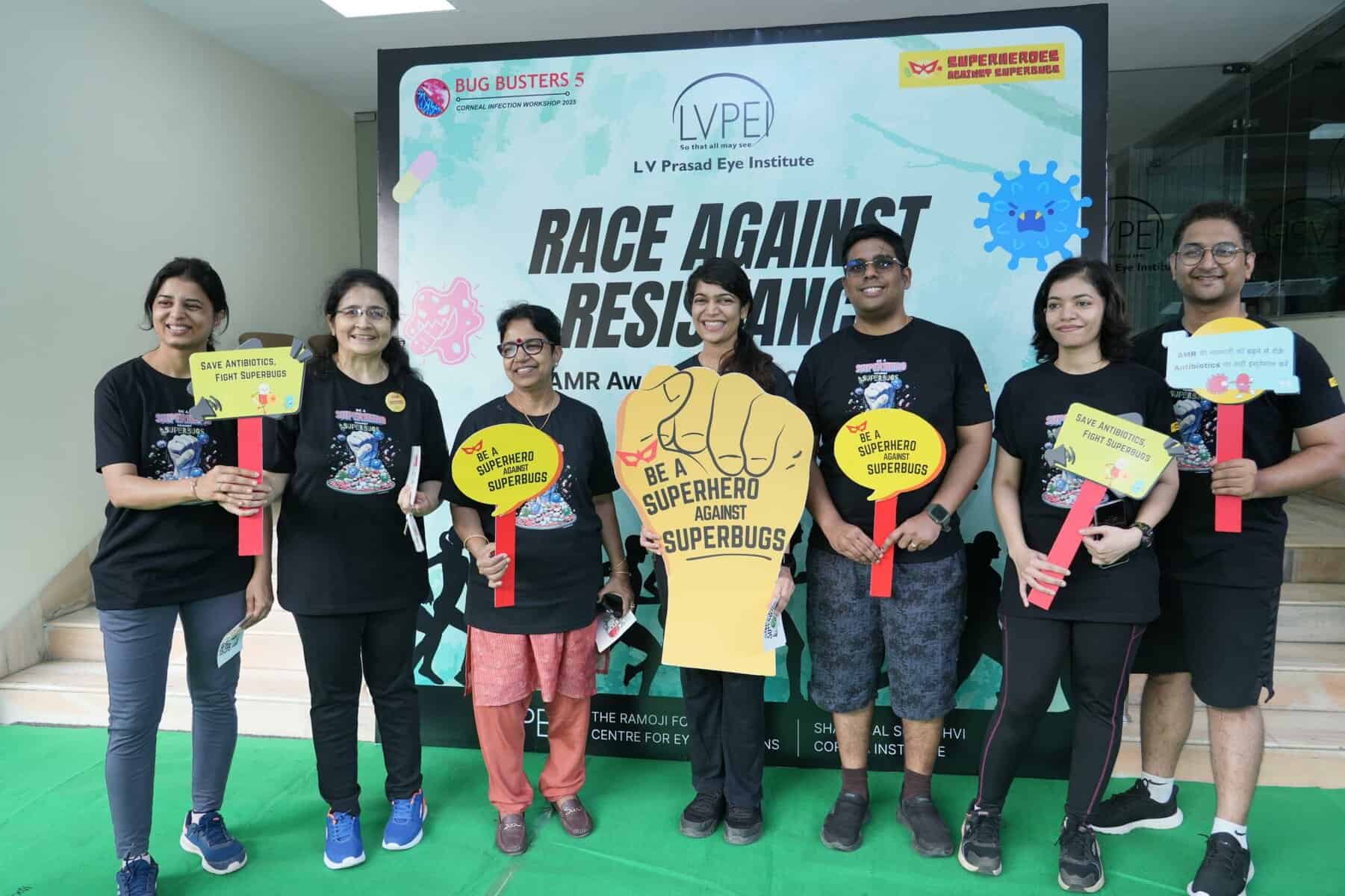
Outside of regular work and study, how many people do you know who will spend their leisure time engaging on a grim problem? And more so, when the problem is invisible. This is what we face constantly in our public engagement on antimicrobial resistance. And, our strategy is to make the format of discussion intriguing and unique for people to want to join in and know more. We use novelty often as a tool to intrigue people.
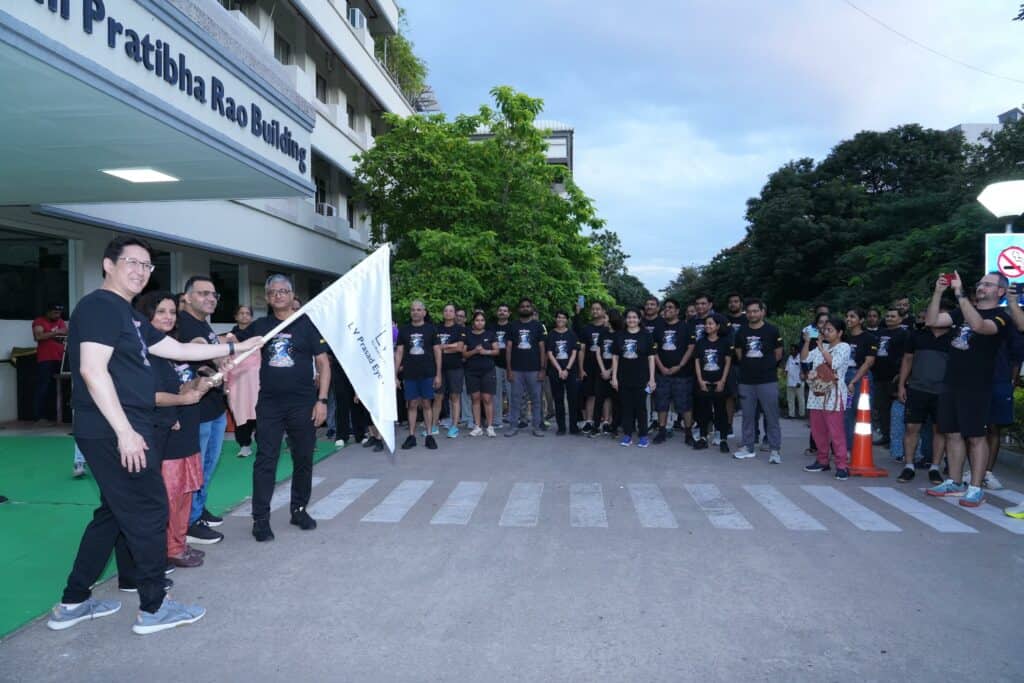
The newest addition to our engagement strategies has been an AMR Challenge Run. We called it ‘Race against Resistance’. And, we designed it as a satellite event for an international medical conference ‘Bug Busters 5.0’ at LV Prasad Eye Institute (LVPEI) in Hyderabad, our strong ally in raising awareness about AMR . This event was designed to engage the participants of the conference who were medical doctors, hospital staff and public health researchers as well as the public.
We wanted to use the format of run for engagement because of two reasons: LVPEI regularly conducts runs in the city to raise awareness on eye care. So, we could count on them to get permission from the city’s authorities (multiple of them as we later learned) and other logistics to organize a run in the public spaces for about 100-200 people. The other was to reach out to the morning walkers and runners at the city’s popular KBR National Park, which is very close to LVPEI’s main campus. We thought these walkers and runners would be our public representatives in the event. But when we rolled out our registration form, we saw a good number of students from other research institutes like TIFR-Hyderabad, CCMB and University of Hyderabad among the registrants. In addition, we found people from the IT and financial sectors as well as homemakers who signed up.
Given the diversity in the participants’ proximity to the topic of antimicrobial resistance, we had our priorities cut out in designing the run: The run needed to engage the medicos, scientists, engineers as well as people without formal training in science and technology. While we had resources from an earlier escape room we had designed for medical students, using those for the run didn’t make sense. They were way too technical for the non-medicos. And, for the medicos, it would feel like their usual business. So, we decided to mint a novel disease condition, add in local humor and design a puzzle challenge around the main key takeaway messages we wanted the participants to carry back with them.
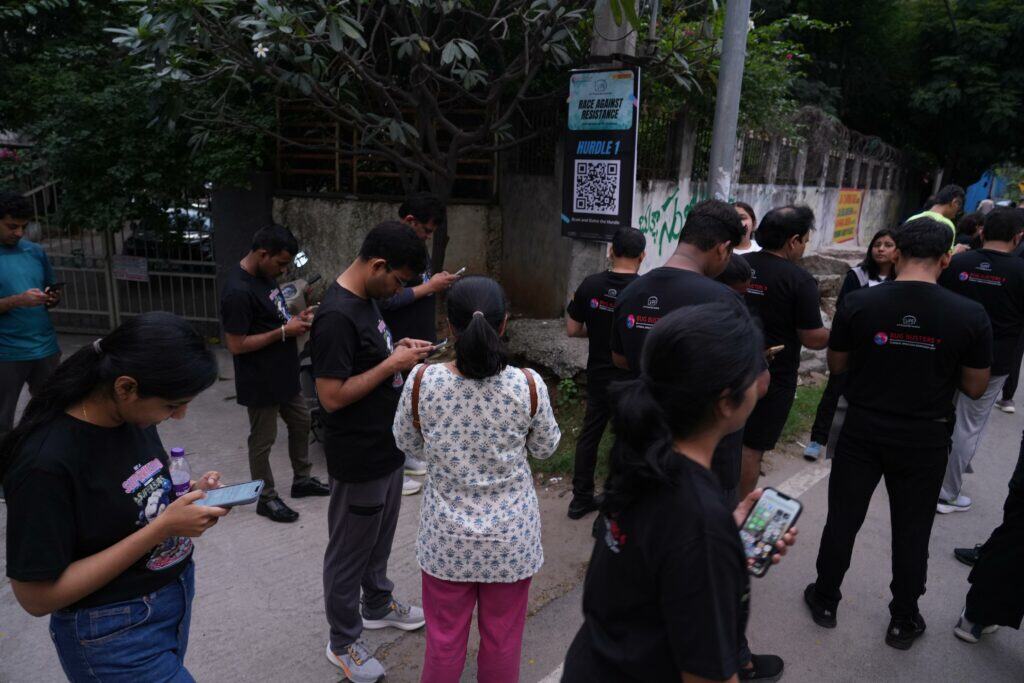
We designed a roughly 4km route along the KBR Park with 4 puzzles. Through these four puzzles, we wanted the participants to think about how detection of a novel infectious disease requires people with specialized skills such as microbiology, remember the function of antibiotics in killing bacteria, and how genetic mutations can render antibiotics useless against bacterial infections.
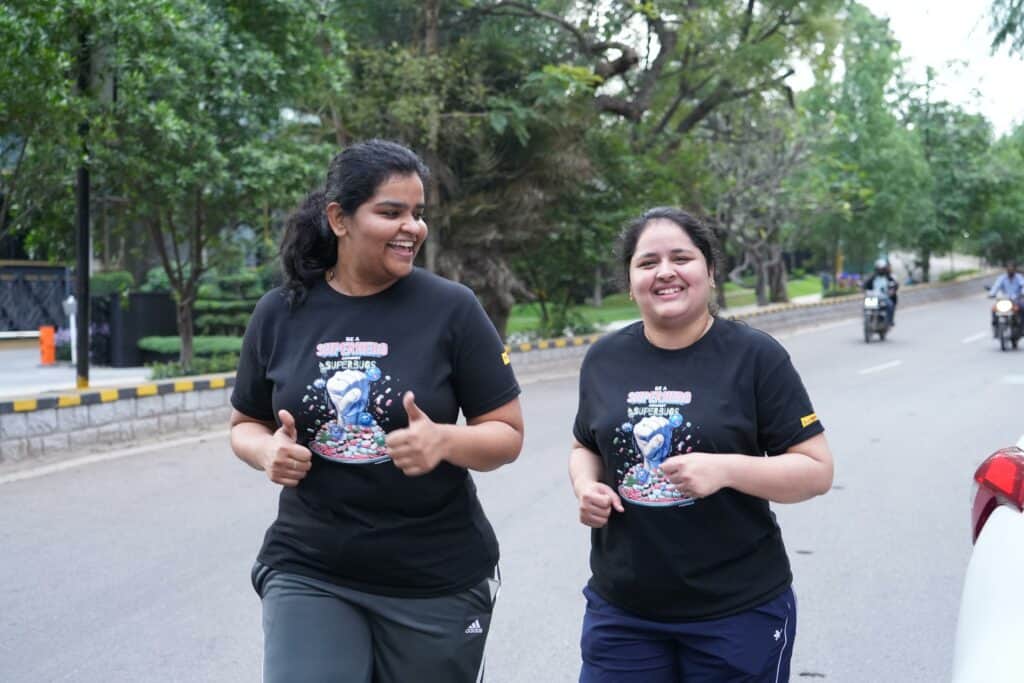
We placed a puzzle roughly after a kilometer. Every puzzle was put on an individual Google Form, whose QR code was pasted at its designated spot. Participants were informed beforehand to carry a smartphone with them. Given the route and the business around that area, the city authorities allowed the run to happen early in the morning, and we started it at 6am. The run finished in about an hour even though some participants preferred walking over running. The fastest finishers with correct answers included the conference participants as well as those from outside – this was our litmus test for the suitability of the questions for the participants.
In addition, Dr Sivaranjani Santosh joined us at the venue of the run. Thanks to her active advocacy on health issues like doctors prescribing antibiotics unnecessarily and her recent win in her fight against pharmaceutical companies selling sugar compositions under the garb of ORS, her presence got the media interested in the event too.
We are now excited to look for partners who can adapt and implement such AMR runs in other parts of India and beyond. If you are a first-time run organizer like us, it will help you to partner with a body who have experience organizing such runs. Or organize it in spaces you are familiar with, such as your study or work campus. If you are doing it yourself, here are some of our learning that might be helpful for you too:
Think of the key messages you want to share through the event and ensure the questions are designed around those. Given most of the participants wouldn’t have heard of the topic, your registration roll-out messaging will need to connect with them. Choose a time of the run that is suitable for your participants and the venue. During the run, you will need volunteers on the route to guide the runners, arrange for water (and biscuits, if possible) en route and have clear signage for toilets. Post-run, the participants enjoy eating their breakfasts together. If you can arrange for it, it gives a chance for people to also discuss what they learned during the run.
And, if a run/walk doesn’t work for the people you want to reach out to, you can design it as a treasure hunt too.
Most importantly, keep sharing the messages of responsible use of antibiotics and be a Superhero against Superbugs.