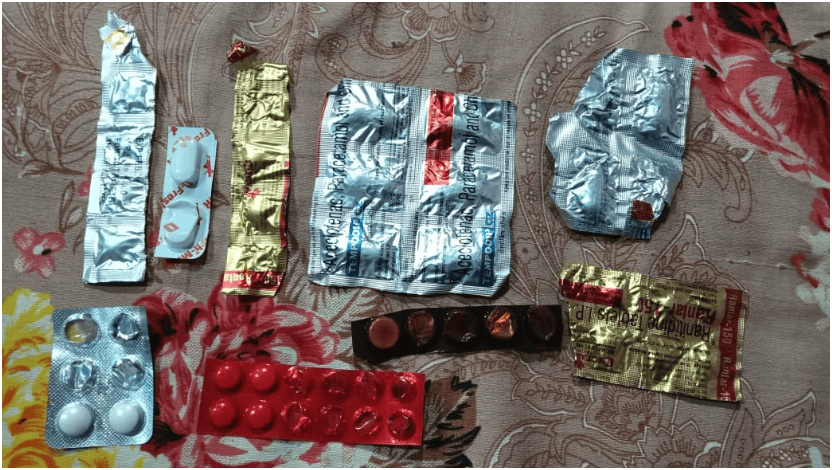
Honestly, I had barely heard of Antimicrobial Resistance (AMR) until a few weeks ago. But the more I read on this, the more it started to worry me because AMR happens when bacteria become resistant to medicines like antibiotics, so the medicines we depend on to treat infections can stop working when we need them the most. This isn’t some rare, far-off problem. It’s something almost every single person deals with. We all take antibiotics at some point, for something as small as a cold or as serious as an infection after surgery. That’s exactly what makes AMR so scary to me. It’s hiding inside one of the most normal things we do.
What really shook me was reading how many people are dying because of this. You go to a doctor, you take the medicine that’s supposed to help you, and it just… doesn’t work. Not because the medicine is bad, but because of carelessness. Sometimes ours, sometimes someone else’s, sometimes just because nobody explained how medicines like antibiotics work.
Among the reasons for antibiotics losing their effectiveness is linked to how they are disposed of. And that hit me the hardest. I had never once thought about where medicine goes after we take it, or after we throw it away. But when antibiotics get flushed out or dumped, they end up in water, soil, even our food chain. Bacteria out there start getting “used to” these antibiotics before we even fall sick. So, by the time we actually need an antibiotic to save us, the bacteria infecting our body might already know how to fight it. That feels unfair and scary at the same time. We’re not just misusing antibiotics when we’re sick, we’re quietly teaching bacteria to beat them even when we’re healthy, through the way we dispose of medicines and pharmaceutical waste. This is a sustainability issue too, and connecting AMR with environmental impact is one of the things that concerns me the most.
It keeps bothering me: if bacteria keep becoming superbugs, are we just going to keep inventing new antibiotics forever? And even if we do, won’t the same carelessness make those useless too, eventually? It makes me realise AMR isn’t only a science problem. It’s a people problem. About habits, and about not knowing better. Basically, an awareness problem.
Why this scares me
I’ll be honest, I’ve done this myself: stopped taking antibiotics the moment I felt a little better, without finishing the course. I never thought twice about it. But what really stays with me is watching my own grandmother and people her age. They take medicines because a neighbour once took the same thing and felt fine. They share pills with each other like it’s completely normal. If there’s leg pain or body ache, they’ll just take “something” and hope it works, without even knowing what it’s for. I’ve seen the same colourful strip of tablets being passed around for years. Get sick, take it, feel okay, stop, get sick again, repeat. Nobody ever thought this was wrong. I didn’t either, until now. That’s what makes this feel urgent to me, not just interesting. Most people aren’t being reckless on purpose. They just don’t know. I didn’t know either, until I started learning about AMR and realised how everyday habits around using antibiotics can contribute to AMR.
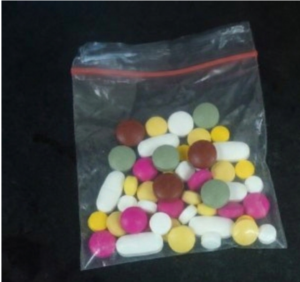
The same colourful strip of tablets, passed around for years, for leg pain, headache, cold, cough, anything at all, PC: AR Sneha
Despite the fear, I have hope for change. Perhaps what gives me the most hope is the possibility of engaging young people, even children, in conversations about antibiotic use and AMR. Kids notice things and follow rules more seriously than we give them credit for. If a child understands why finishing a course of medicine matters, or why you shouldn’t share leftover pills, they can gently stop that habit at home, with parents, with grandparents. In a country like ours, where families live together and medicines get passed around so easily, this could actually change something. Not through some big policy, but through one kid.
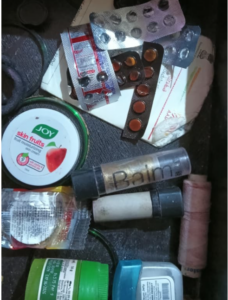
Medicines kept like any other household item, PC: AR Sneha
I don’t know if this fixes the bigger picture: the environment part, the pharma part, the policy part all feel much bigger than one household. But it does make me think that the gap here isn’t really about medicine or science. It’s about nobody ever sitting my grandmother down and explaining this to her the way I’m only now understanding it myself. That’s a strange thing to sit with, as a concerned granddaughter, family member, chemistry student, and most importantly, as a citizen.
A R Sneha is a third-year undergraduate student at Ashoka University, majoring in Chemistry. She is interested in chemistry research and science communication, particularly in understanding and communicating how science connects with our everyday lives.