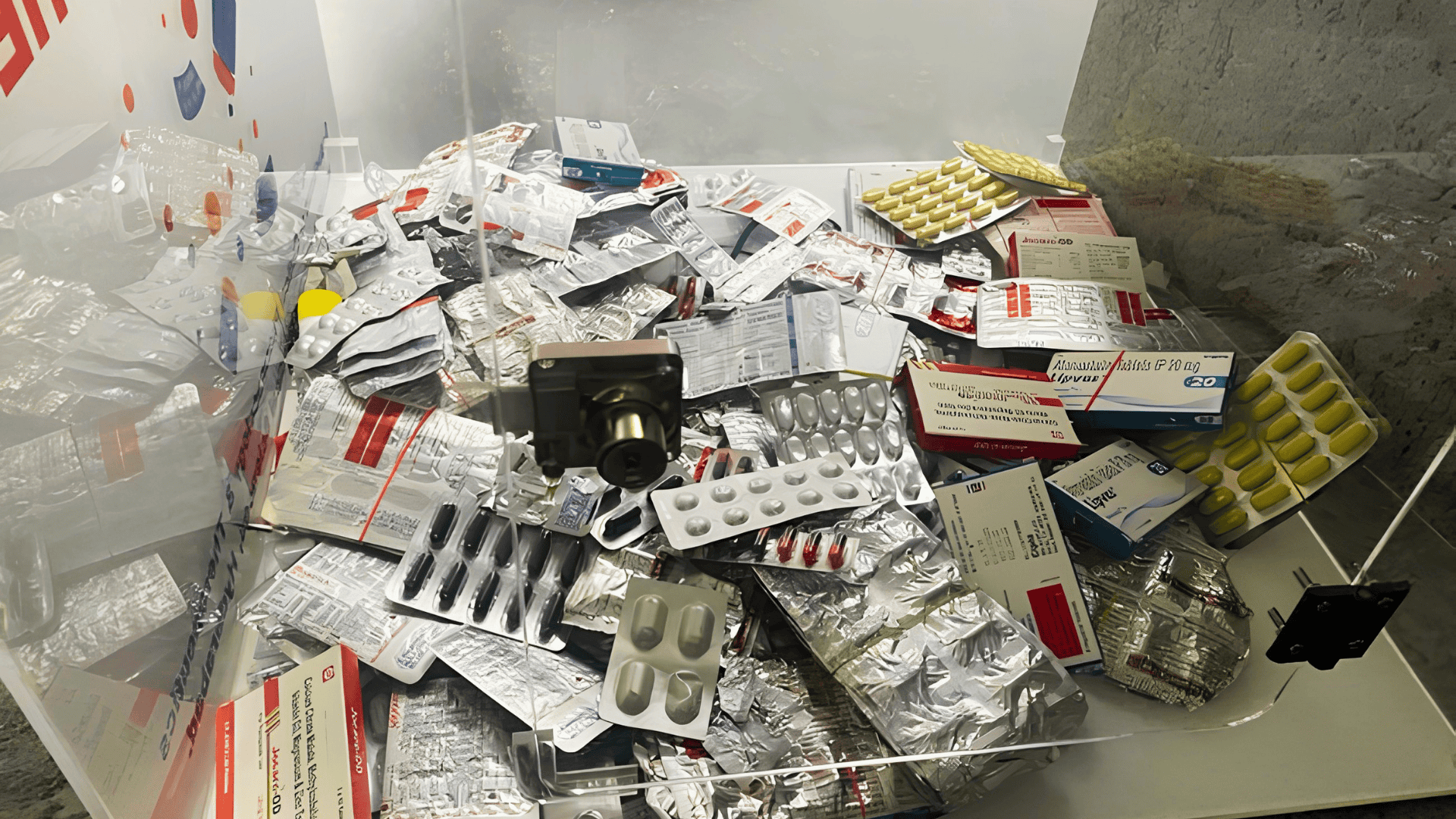
Antimicrobial resistance (AMR) is now widely recognised across medical and policy communities as an immediate global health crisis, not a future threat, with far-reaching impacts across multiple sectors. To curb AMR, it is also important to reduce antibiotics polluting our environments. More antibiotics in the environment means bacteria turn into resistant superbugs faster. However, leftover antibiotics, common in both households as well as healthcare facilities contribute to this pollution.
Households buy antibiotics for self-medication without knowing what is causing the illness or whether it is the right antibiotic at the right dose. They also procure medicines through insurance schemes such as Central Government Health Scheme and Employees’ State Insurance Corporation, or through online e-commerce portals with limited regulatory oversight. They stop consuming the medicines as soon as they feel better and store the remainder for future self-medication.
Healthcare facilities also accumulate expired medicines in bulk, which may result from samples provided by medical representatives, unused medicines left over from treatment, or surplus following bulk orders. Traditionally, such procured medicines are meant to be returned to the manufacturer for proper disposal. However, system failures such as the absence of a reverse-distribution contract or staff not following the standard operating procedures sometimes result in medicines being dumped without proper disposal practices.
Irrespective of the setting, the leftover antibiotics are often flushed into sewage systems or dumped as garbage. This occurs despite established guidelines from governments, healthcare institutions, and international health organizations promoting rational antibiotic use and safe pharmaceutical waste disposal. The unsafe antibiotic disposal continues because the current healthcare and waste systems are not equipped to handle it properly. Policies may exist on paper, but their implementation is hindered by weak enforcement mechanisms, inadequate monitoring, limited awareness, and insufficient infrastructure.
We still don’t know what to do with leftover antibiotics
The unsafe disposal continues not only because people are careless, but because the systems around them often make safe disposal difficult. First, there is inadequate coordination between healthcare systems, pharmaceutical industries, and pollution control boards on safe disposal of antibiotics. Second, healthcare workers and the public often receive limited training or education regarding the environmental and public health consequences of improper antibiotic disposal. Third, accessible drug take-back systems and dedicated pharmaceutical waste disposal facilities remain scarce in many regions in India. Together, these gaps demonstrate that while awareness around AMR has increased, the systems needed for safe antibiotic disposal remain underdeveloped.
Among patients, insufficient awareness and low risk perception regarding AMR and environmental contamination lead to unsafe disposal practices. Leftover antibiotics are frequently stored for future use, shared with family members, or discarded casually. Convenience drives this behaviour, when no nearby collection systems exist, discarding medicines with household trash or flushing them down drains becomes the easiest option.
Pharmacists also face behavioural and operational barriers with many viewing disposal management as outside their core professional responsibilities. Concerns regarding additional workload, cost implications, and regulatory liability further discourage active participation. Moreover, patient counselling on safe disposal practices is inconsistent across pharmacy settings.
Furthermore, healthcare professionals primarily focus on diagnosis, prescribing, and treatment outcomes, often overlooking discussions on post-consumer antibiotic management. Time constraints during consultations, limited training on pharmaceutical waste disposal, and assumptions that disposal responsibility belongs to pharmacists or pharma companies or pollution control boards all contribute to the problem.
Pharma responsibility doesn’t end at manufacturing
A major stakeholder in addressing this challenge is undoubtedly the pharmaceutical industry. Traditionally, pharmaceutical companies have focused on drug development, manufacturing, sales and distribution. However, if we want to effectively tackle AMR, responsibility must extend beyond the point of sale. Pharmaceutical industries should adopt the principle of Extended Producer Responsibility (EPR), where manufacturers remain accountable for the environmental impact of their products throughout the entire lifecycle, including post-consumer disposal.
Under EPR, pharmaceutical companies should finance and operationalize antibiotic take-back programs in collaboration with pharmacies, hospitals, waste management agencies, and pollution boards. They should ensure the environmentally sound destruction of returned expired or unused antibiotics through licensed hazardous waste facilities using methods such as high-temperature incineration or by effluent treatments which effectively destroy active pharmaceutical ingredients while minimizing environmental pollution. As these processes require specialized infrastructure, strict regulatory oversight, and emission controls, individual pharmacies or households or communities are not equipped to undertake such destruction safely.
In addition, companies need to support monitoring systems to assess environmental contamination and AMR risks. They should also improve packaging and labelling by including clear disposal instructions understandable to the public.
Public awareness campaigns sponsored by industry, such as the recent GSK-PATH collaborative initiative on safe antibiotic disposal, can also play a significant role in developing innovative disposal solutions, educating communities on the risks of improper disposal, and facilitating the collection and responsible disposal of unused or expired antibiotics.
Solutions for homes, hospitals, pharmacies – community led efforts to better regulations
The challenges in implementing safe disposal vary across different levels of the healthcare system. And, hence, they need different solutions.
Models such as the Haritha Sena model in Kerala can be adopted at community levels. This model serves as a community-led waste management paradigm in Kerala, powered by a workforce exceeding 35,000 trained women professionals. Largely integrated with the Kudumbashree mission and local administrative bodies, the Sena facilitates the systematic door-to-door retrieval of segregated, inorganic waste from residential and institutional sectors. This operational model is sustained through a prescribed user fee of approximately ₹70 to 100, ensuring consistent service delivery across the state.
At healthcare facilities, inadequate waste management infrastructure, inconsistent protocol adherence, and limited monitoring weaken compliance. Safe antibiotic disposal practices should be incorporated into National Accreditation Board for Hospitals & Healthcare Providers (NABH) accreditation standards.
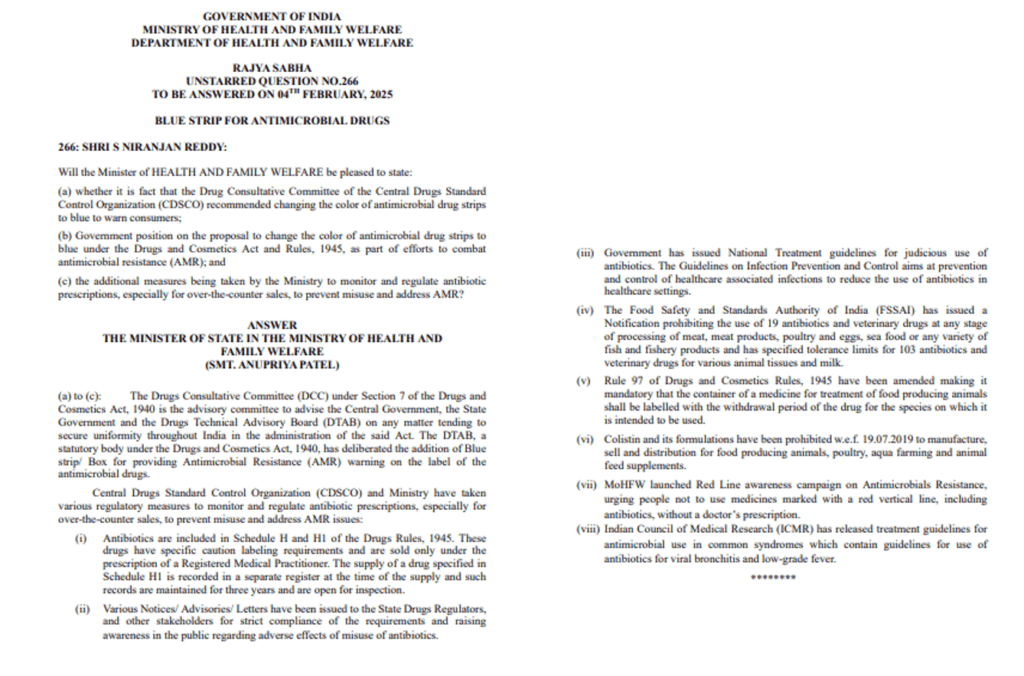
Improving safe antibiotic disposal will require stronger regulation and accountability. Central Drugs Standard Control Organization (CDSCO)’s initiative of introducing a conspicuous blue line for antibiotics and antimicrobial drugs is a welcome step toward improving identification and promoting antimicrobial stewardship by pharmacists. Similar to the earlier Red Line campaign launched by the Ministry of Health and Family Welfare to discourage irrational antibiotic use, such labeling initiatives can enhance public awareness and support efforts to combat AMR.
In addition, CDSCO could consider making post-consumer antibiotic waste management and take-back programs mandatory during Marketing Authorization Holder (MAH) approval. Creating such regulatory binding obligations would improve accountability among pharmaceutical companies and ensure structured implementation of safe disposal systems.
CDSCO should also strengthen regulatory oversight and take stringent action against unauthorized online antibiotic sales on e-pharmacy platforms. Lesser unused antibiotics in households will mean lesser disposal problems.
What one take-back initiative in a hospital revealed
To accelerate disposal readiness, one highly impactful operational policy change would be the mandatory implementation of antibiotic take-back programs through pharmacies and hospitals. Such programs would provide accessible disposal channels for the public while normalizing responsible disposal practices within communities. One such initiative was implemented at Nizam’s Institute of Medical Sciences by the Department of Clinical Pharmacology and Therapeutics through the installation of two custom-made acrylic antibiotic disposal boxes in the old and new OPD blocks. The initiative facilitated the collection of more than 52,000 unused or expired medications in a span of 8 months, of which 5.2% were unused or expired antimicrobials.
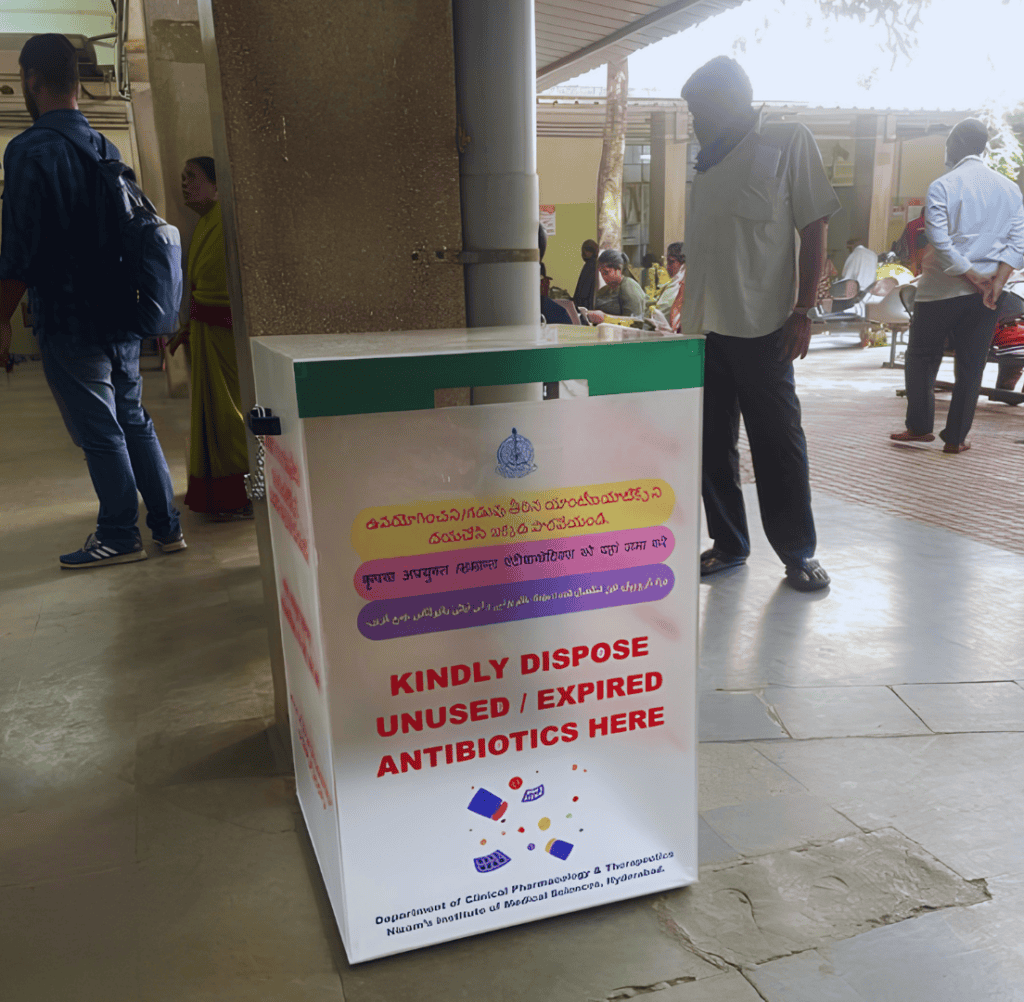
The medication take-back box at NIMS, Hyderabad, Photo: Ruby Raphael
Among the discarded antibiotics, 60% belonged to the WHO Watch category, 38% to the Access group, and 2% to the Reserve group. Notably, antitubercular drugs constituted 28% of discarded antibiotics, raising concerns regarding non-adherence to treatment, gaps in national TB control efforts, and the potential emergence of drug-resistant and extensively drug-resistant tuberculosis (XDR-TB). A close eye at the unused antibiotics collected in the take-back programs can help come up with local strategies and policies.
Guidelines to changemakers
Antibiotic stewardship largely focuses on rational prescribing and responsible dispensing. But it must integrate safe disposal as an equally important pillar. While guidelines are essential, real progress depends on translating policies into operational systems supported by infrastructure, accountability, behavioural change, and multi-sector collaboration.
The persistence of unsafe antibiotic disposal despite existing AMR guidelines serves as a warning that healthcare systems are still evolving toward full preparedness. Addressing these gaps now is critical to protecting both public health and the effectiveness of antibiotics for future generations.
Dr Ruby Raphael is a clinical pharmacologist and Manager, Clinical Development & Medical Affairs at Hetero Drugs Ltd, Hyderabad. She previously served at NIMS, Hyderabad, contributing to COVID-19 vaccine trials and public health initiatives. She is a passionate advocate for combating antimicrobial resistance and founded NIMS’ Antibiotic Safe Disposal Campaign.