This piece was jointly written by Ananya Mukherjee and Khushi Thakur.
The story of human civilisation is also a story of how water has shaped lives. And, the freshwater bodies are essential for supplying water for all animals to drink and plants to grow. But currently, there are significant threats to water security as 1 in 4 people have no access to safe water. Additionally, wastewater discharge into freshwater bodies worsens this problem.
A recent report by the United Nations Environment Programme (UNEP) states that 42% of the global municipal wastewater sewage is discharged untreated with wastewater reaching nearly 359 billion cubic meters in 2021. Wastewater combines waste from household cleaners, industrial effluents and medical waste all of which have high amounts of disinfectants and antibiotics leading to creation and persistence of Antimicrobial Resistance (AMR).
Just like how drops of water can form an indomitable puddle, frequent and irregular doses of antibiotics can lead to AMR bacteria or ‘superbugs’. The sensitive bacteria die, and repeated low doses of antimicrobials help in the growth and proliferation of resistant bacteria, to multiply and increase in number, resulting in a health crisis. They are resistant because they carry special genes called the Antimicrobial Resistant Genes (ARGs). And, if that were not concerning enough, they are able to share these genes with other neighbouring bacteria too. Therefore, in environments that contain antibiotics, the resistant bacteria are the only ones that survive and turn the rest of the bacterial population like them.
AMR infections claimed nearly 4.95 million lives in 2019 alone and they may surpass climate change in its impact on humans, plants, and animals. The two crises are also closely connected. Rising temperatures can help bacterial infections spread and may also make AMR more likely to develop and spread. In this way, climate change can make the AMR crisis worse by creating conditions where both infections and drug-resistant bacteria can thrive.
A study published in The Lancet estimates that, if remains unchecked, AMR could cause up to 40 million deaths globally between 2025 and 2050, with some of the highest burdens expected in South Asia, including India, and sub-Saharan Africa. Treating AMR infections could also add up to US$ 1 trillion health care costs annually by 2050, while it could lead to US$ 1 – 3.4 trillion in annual GDP losses by 2030.
How pollution creates hotspots for AMR
Our freshwater bodies have become a source of the resistant bacteria. This problem persists both in our cities and villages, and puts us all at risk. Over the past century, the freshwater bodies have been used as dumping grounds of wastewater from residential communities to hospitals to industries. These, when untreated, bring both pathogens as well as antibiotics with them. An equally prominent contributor is wastewater from animal and plant farms. India is one of the top five users of antibiotics in livestock feed, and these find their way into our waters.
The incoming water into these water bodies also bring in a lot of nutrients that cause eutrophication – plants grow on the water surfaces so much that they deplete the nutrients in water. This disrupts the natural microbiome of the water bodies, but favours pathogenic microbes. Microbes can attach to microplastics, which provide a nutrient-rich surface for biofilms to grow. Here, traits such as strong adhesion, biofilm formation and antibiotic resistance can help resistant microbes outcompete other microbes.
Algal bloom, altered nutrient composition, oxygen depletion, water turbidity, loss of plants, and foodweb alterations collectively come under the umbrella term anthropogenic eutrophication. Increased levels of nutrients such as nitrogen and phosphorus can cause aquatic organisms such as algae, zooplankton, snails and fish to multiply, creating conditions where pathogens can thrive. Algal blooms and low oxygen levels can also weaken these organisms, making them more vulnerable to infection. Other pollutants, such as microplastics and organic matter, can provide surfaces for microbes to form biofilms, creating further opportunities for pathogens to grow.
These issues are aggravated as water levels decrease in our water bodies. This increases the concentration of pathogens as well as antibiotics in the water, creating an even better cauldron for the emergence of more AMR bacteria. Higher concentrations of antibiotics favour AMR bacteria, while the close proximity of different bacteria in these environments can increase opportunities for AMR genes to spread between them.
Freshwater bodies as reservoirs of superbugs
Studies show that freshwater microbiomes, especially in urban areas, contained more beta-lactam (a common class of antibiotics)-resistant bacteria as well as resistant genes and plasmids. Many of the resistant genes possibly came from the human gut bacteria, a consequence of release of untreated sewage into urban water bodies. This freshwater which is used by local communities, thus, becomes a source of infections, and the difficult to treat AMR ones.
While the overall concerns are true for both urban and rural water bodies, they host different kinds of bacteria. Urban lakes have higher relative abundance of Actinobacteria, Alphaproteobacteria, Burkholderiales and Firmicutes – bacterial groups which have notorious pathogens, than in rural waters. Potential pathogens such as Alistipes, Enterococcus, Escherichia/Shigella and Streptococcus also have higher relative abundance in urban areas.
Many communities are directly dependent on these waterbodies as their daily source of water, and further many are indirectly affected by accessing these water through underwater reservoirs via tubewells or borewells. The presence of resistant pathogens in community water sources directly translates into localised disease risk.
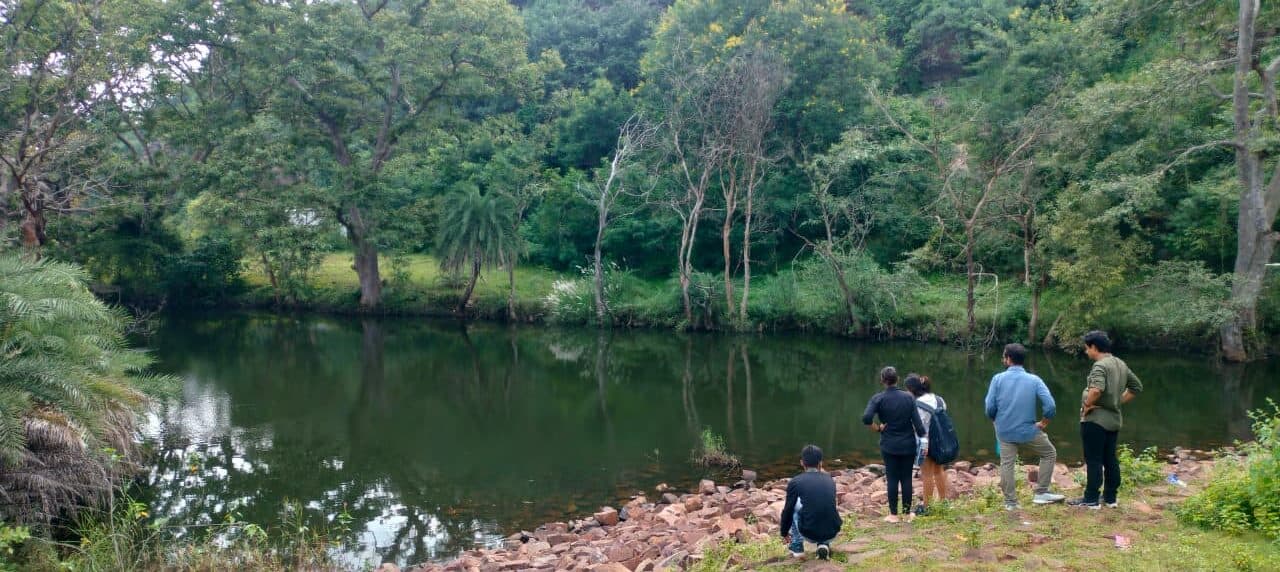
An image of Bada Talaab in Bhopal before the author’s team began collecting samples for testing microbiome of lake water. Credit: Dr Achyut Kr. Banerjee.
Our own work (unpublished) in Bhopal, Madhya Pradesh, illustrates this pattern. By sequencing bacterial DNA from three urban freshwater systems—the Upper Lake, Lower Lake and Hathikheda Dam—we found that although each water body had a distinct microbial community, all contained bacteria commonly associated with polluted waterbodies. This included opportunistic human pathogens such as Aeromonas, Klebsiella, Enterobacter, Escherichia/Shigella and Salmonella causing diseases like dysentery, gastroenteritis, urinary tract infection, peritonitis and sepsis. These microbes cause disease when our immune system is compromised due to any medications or pre-existing health conditions. Their presence highlights the necessity of routine microbial monitoring alongside conventional water-quality testing.
A fragmented picture of AMR in freshwater
Working exclusively on water microbiome composition of community-used water bodies can help us to understand more effectively the risks faced by the people and inform targeted surveillance, water governance and public health interventions. But despite these possibilities, global literature on urban freshwater microbiomes and their traits remains sparse and fragmented, making it difficult to build a comprehensive understanding of AMR. Most studies are limited to specific seasons, geographical locations or individual AMR genes. Long-term mapping of changes in urban freshwater microbiomes is also largely missing.
This geographical gap is particularly evident in Asia. Most studies of freshwater microbiomes from the region come from China. This may be because China is one of the world’s largest producers and consumers of antibiotics, placing it at an elevated risk for the development and spread of AMR. In comparison, there are fewer than 10 studies from other Southeast Asian countries. A broader understanding of freshwater microbiomes across different regions could help us better monitor and understand AMR, as well as identify patterns that may otherwise be missed when research remains localised.
The gaps are not just geographical. Studies are also concentrated on certain types of water bodies, with rivers and lakes receiving most of the attention. Canals, stormwater systems and smaller urban water bodies are rarely examined, despite being closely connected to dense human populations.
The uneven and fragmented nature of current research limits our ability to understand how urban freshwater microbiomes change across places and over time, and what this means for AMR risk. Building a more representative baseline will require coordinated, international efforts to map urban freshwater microbiomes using standardised methods. Researchers around the world, together with citizen science networks that can support broad community-led sampling, could help fill these geographical and ecological gaps. Such efforts would provide a stronger foundation for long-term monitoring of freshwater microbiomes and the environmental spread of AMR.
This piece is written by Ananya Mukherjee, Biology Faculty at Azim Premji University, Bhopal, and Khushi Thakur, Biology Honours student at Azim Premji University, Bhopal. Special thanks to Dr Achyut Banerjee for his perspectives.
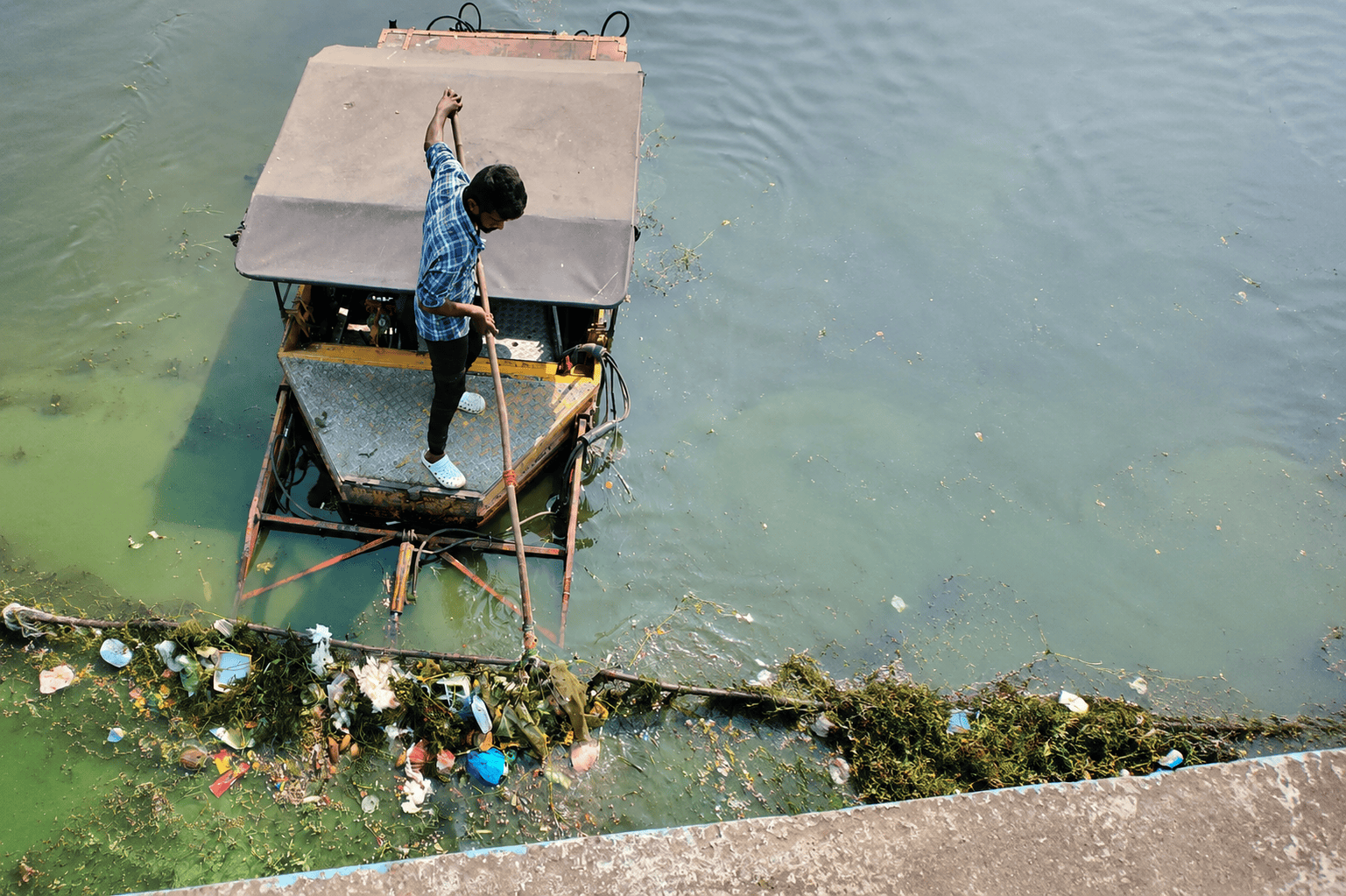
Banner image: Hathaikeda Dam clean up in progress after Ganesh Chaurthi festivities. Credit- Vedanshi Gupta
For another look at this topic, check out our comic, Detective Aarya.